Common problem
How Much Does a Drip Irrigation Tape Production Line Cost? A Complete Buyer's Guide
Investing in a Drip Irrigation Tape Production Line is an important decision for manufacturers looking to expand irrigation equipment production or enter new agricultural markets. One of the first questions buyers ask is, "How much does a drip irrigation tape production line cost?"
The answer is not as straightforward as quoting a fixed price. Unlike standardized equipment, a drip tape production line is typically configured according to the customer's production requirements, product specifications, and automation preferences. As a result, two production lines designed for different applications may have significantly different configurations and investment costs.
Rather than comparing quotations based only on the initial purchase price, experienced buyers evaluate the overall value of the production line. Production efficiency, equipment stability, future expansion, and technical support all influence the long-term return on investment.
This guide explains the main factors that affect the price of a Drip Tape Production Line and provides practical advice for comparing different solutions before making a purchasing decision.
Is There a Standard Price for a Drip Irrigation Tape Production Line?
Many buyers begin their search by looking for a standard market price. However, there is no universal price for a Drip Irrigation Tape Production Line because every production project has different requirements.
For example, a manufacturer producing standard drip irrigation tape for local agricultural applications may require a different production line from a company supplying multiple international markets with various tape specifications. Production capacity, machine configuration, and automation requirements all influence the final quotation.
In addition, suppliers may recommend different equipment configurations according to production goals. Some manufacturers focus on maximizing production efficiency, while others prioritize flexibility for producing multiple tape specifications. These differences explain why quotations from different suppliers may vary even when the equipment appears similar.
Instead of asking only "What is the price?", buyers can obtain more meaningful quotations by providing detailed production requirements from the beginning.
What Factors Affect the Price?
Several factors influence the cost of a Drip Irrigation Tape Production Line. Understanding these factors helps buyers compare different quotations more effectively instead of making decisions based only on the lowest price.
Production Capacity
Production capacity is one of the most significant factors affecting equipment investment.
Factories with higher production requirements generally need larger extrusion systems and supporting equipment capable of maintaining stable operation over extended production periods. As production capacity increases, the overall machine configuration becomes more comprehensive, which naturally affects the quotation.
When planning a new production line, it is advisable to consider not only current production demand but also future business growth. Selecting equipment that matches long-term production objectives may reduce the need for major upgrades later.
Automation Level
Automation also has a considerable influence on the overall investment.
Some manufacturers prefer production lines with a higher degree of automation to simplify daily operation and improve production consistency. Others choose configurations that require more operator involvement because they better match their production scale or available workforce.
Neither approach is universally better. The most suitable solution depends on production requirements, labor availability, and future expansion plans. Evaluating automation from a long-term operational perspective is often more valuable than focusing only on the initial purchase price.
Machine Configuration
Machine configuration is another important factor that directly affects equipment value.
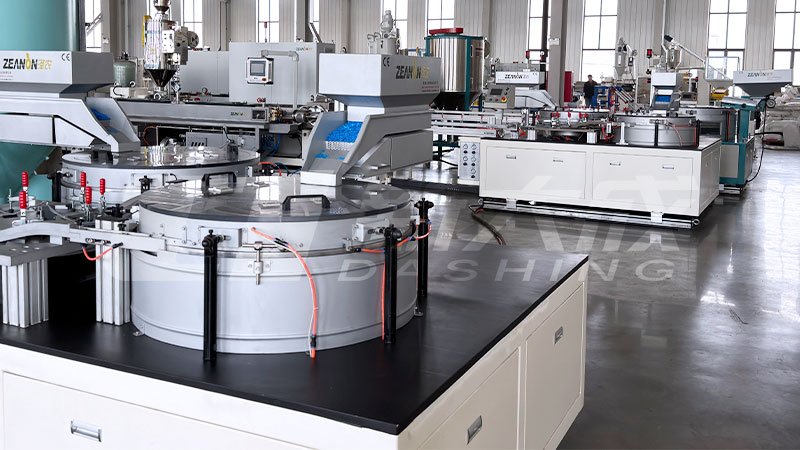
A Drip Irrigation Tape Machine is composed of multiple systems working together throughout the production process. Stable extrusion, accurate dripper feeding, reliable punching, efficient cooling, consistent hauling, and orderly winding all contribute to overall production performance.
Differences in configuration may not always be obvious from a quotation alone, which is why buyers should compare the complete technical proposal rather than considering the equipment price in isolation.
Before requesting a quotation, it is helpful to prepare the following information:
Expected production capacity
Drip tape width and wall thickness
Dripper type and spacing requirements
Target market or application
Preferred automation level
Providing this information enables suppliers to recommend a production line that better matches your manufacturing objectives and helps buyers receive more accurate quotations.
How to Compare Different Quotations
When comparing quotations from different suppliers, many buyers naturally focus on the total price. However, the quotation itself only reflects part of the investment. A more meaningful comparison should consider what is included in the proposed solution and whether the equipment can meet current and future production requirements.
A detailed quotation should explain the machine configuration, production capacity, applicable product specifications, and the scope of supply. If two quotations differ significantly in price, it is worth understanding whether the difference comes from production capacity, automation, supporting equipment, or technical services rather than assuming one supplier is simply more expensive.
It is also important to confirm whether the proposed production line is designed around your actual production needs. A production line with unnecessary features may increase the investment without creating additional value, while an underconfigured solution may limit future production or require additional upgrades after installation.
Instead of comparing prices alone, buyers should compare the overall production solution.
Example of Factors to Compare
| Comparison Item | Questions to Consider |
|---|---|
| Production Capacity | Does the output match your current and future production plans? |
| Product Specifications | Can the production line produce the tape sizes and specifications you require? |
| Automation Level | Does the configuration match your factory's labor availability and production goals? |
| Machine Configuration | Are the main production units suitable for stable continuous operation? |
| Technical Support Does | Does the supplier provide installation guidance, commissioning, training, and after-sales support |
Using this approach makes it easier to compare quotations objectively and select equipment based on overall value rather than purchase price alone.
Why the Lowest Price Is Not Always the Best Choice
Every manufacturer hopes to control investment costs, but choosing equipment solely because it offers the lowest quotation may not always produce the best long-term result.
A Drip Irrigation Tape Production Line is expected to operate continuously for many years. During this time, production stability, product consistency, maintenance convenience, and technical support become increasingly important. Even small differences in machine reliability may influence production efficiency over the lifetime of the equipment.
For this reason, experienced buyers often evaluate the total value of the production line instead of focusing exclusively on the initial investment. Equipment that better matches production requirements may contribute to more stable manufacturing, easier operation, and greater flexibility as production expands.
The objective is not to purchase the most expensive production line, but to invest in equipment that supports long-term manufacturing goals and provides reliable performance throughout its service life.
Questions to Ask Before Choosing a Supplier
Before making a purchasing decision, it is helpful to discuss your production requirements with the equipment supplier. Clear communication allows both sides to determine whether the proposed solution is suitable for your project.
Useful questions include:
Can the production line be configured according to my required tape specifications?
What production capacity is recommended for my target market?
What technical support is available during installation and commissioning?
Can the production line be upgraded if production requirements increase in the future?
Preparing these questions in advance can help buyers evaluate different suppliers more efficiently and reduce uncertainty during the purchasing process.
Conclusion
The cost of a Drip Irrigation Tape Production Line depends on many factors, including production capacity, automation level, machine configuration, product specifications, and technical support. Because every manufacturing project has different objectives, there is no single price that applies to every production line.
When comparing different suppliers, buyers should look beyond the quotation itself and evaluate how well the proposed solution matches their production plans. A production line that supports stable operation, future expansion, and consistent product quality often provides greater long-term value than one selected solely because of its lower purchase price.
If you are planning to invest in a new Drip Tape Production Line, preparing detailed production requirements before requesting a quotation will help suppliers recommend a configuration that better fits your manufacturing needs. A well-matched solution is the foundation for efficient production, consistent product quality, and sustainable business growth.