Common problem
Pressure Compensating Drippers vs. Non-Pressure-Compensating Drippers: Key Differences
In drip irrigation, the type of dripper has a direct influence on how water is distributed along an irrigation line. Pressure compensating drippers and non-pressure-compensating drippers are designed for different operating conditions and irrigation requirements.
Understanding the difference between these two dripper types can help irrigation equipment manufacturers select suitable dripper designs, components and production methods.
What Is a Pressure Compensating Dripper?
A pressure compensating dripper, commonly called a PC dripper, is designed to provide a more consistent water flow across a defined operating pressure range.
In a conventional non-pressure-compensating dripper, flow can change as the water pressure changes. A pressure compensating dripper uses an internal regulating structure to control the flow response as pressure varies.
This makes PC drippers particularly useful where maintaining relatively uniform water distribution is important.
The actual structure of a pressure compensating dripper varies according to its design. The internal pressure-regulating element and flow path are important parts of the overall dripper structure.
What Is a Non-Pressure-Compensating Dripper?
A non-pressure-compensating dripper does not use the same pressure-regulating mechanism as a PC dripper.
Its water output is more directly affected by changes in operating pressure. As pressure increases or decreases, the flow rate can change accordingly.
This type of dripper can still be suitable for many irrigation applications, particularly where the irrigation system has relatively stable pressure and the application does not require the same level of pressure compensation.

Pressure Compensating vs. Non-Pressure-Compensating Drippers
The main difference is how the dripper responds to changes in water pressure.
| Feature | Pressure Compensating Dripper | Non-Pressure-Compensating Dripper |
|---|---|---|
| Pressure response | Designed to regulate flow within its operating range | Flow changes more directly with pressure |
| Internal structure | Includes a pressure-regulating mechanism | Simpler flow-control structure |
| Flow uniformity | Better suited to applications requiring consistent flow | Depends more strongly on system pressure |
| Irrigation conditions | Useful for varying pressure conditions | Suitable for relatively stable pressure |
| Manufacturing | Requires accurate assembly of internal components | May have a simpler assembly structure |
The actual performance of either type depends on the dripper design, materials, operating pressure and manufacturing quality.
Why Is Pressure Compensation Important in Irrigation?
Water pressure is not always identical throughout an irrigation system.
Pressure can vary because of:
Pipe length
Elevation differences
Pump conditions
Irrigation zone design
Friction losses
Different operating conditions
When pressure changes significantly, a conventional dripper may produce different flow rates at different positions in the system.
A pressure compensating dripper is designed to reduce the effect of these pressure variations within its intended operating range.
For irrigation projects where relatively consistent water delivery is important, this characteristic can be an important part of dripper selection.
How Does a Pressure Compensating Dripper Work?
A PC dripper generally contains a specially designed internal flow path and pressure-regulating component.
When the water pressure changes, the internal regulating element responds to the pressure difference. This changes the effective flow condition inside the dripper and helps maintain a more controlled output.
The exact working principle depends on the specific dripper design.
For manufacturers, this means that producing a pressure compensating dripper is not simply a matter of molding the outer body. The internal components, dimensions and assembly accuracy can also affect the finished product.
Why Are Internal Components Important?
The pressure-regulating component is one of the important differences between a conventional dripper and a pressure compensating design.
Its shape, elasticity, position and interaction with the internal flow structure can influence the final performance of the dripper.
During production, the component therefore needs to be positioned and assembled consistently.
For manufacturers producing PC irrigation drippers, the production process may include:
Injection molding of dripper components
Preparation and feeding of individual components
Accurate positioning of the internal component
Installation of the pressure-regulating elastic component
Final dripper assembly
Inspection and testing
Consistent assembly helps reduce variations between individual drippers.
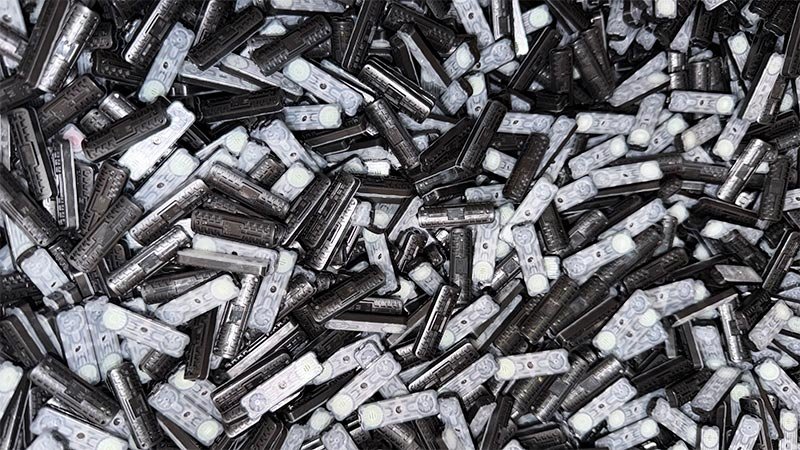
Manufacturing Considerations for PC Drippers
The production of pressure compensating drippers involves more than the injection molding process.
The dripper mold needs to match the product design, while the assembly process needs to accommodate the individual components used in the PC dripper.
Important considerations can include:
Dripper Design
The geometry of the dripper determines the structure of the mold, flow path and assembly process.
Internal Components
The type and dimensions of the pressure-regulating elastic component need to match the dripper design.
Component Feeding
Individual components need to be supplied to the assembly position in a consistent manner.
Assembly Accuracy
The internal component must be installed in the intended position to maintain product consistency.
Quality Control
Manufacturers may need to inspect the finished drippers and verify flow performance according to their product requirements.
Where Are Pressure Compensating Drippers Used?
Pressure compensating drippers can be considered for irrigation applications where relatively consistent water delivery is important.
Typical applications may include:
Agricultural drip irrigation
Greenhouse irrigation
Orchard irrigation
Landscape irrigation
Precision irrigation systems
The appropriate dripper type depends on the irrigation system, crop requirements, operating pressure and product design.
From PC Dripper Components to Finished Products
For manufacturers, the production process can involve several types of equipment rather than a single machine.
Injection molding equipment and dripper molds can be used to produce the molded components. After molding, additional equipment can be required for component feeding and assembly.
For pressure compensating designs, a dedicated pressure compensating dripper assembly machine can be used to assemble the dripper components and install the pressure-regulating elastic component.
This allows the molding and assembly stages to be considered as connected parts of the overall PC dripper manufacturing process.
Choosing the Right Dripper Production Equipment
Before selecting equipment, manufacturers should first define the dripper design and production requirements.
Useful information includes:
Dripper type
Product drawings
Component structure
Pressure-regulating component specifications
Required production capacity
Desired automation level
Finished product requirements
Providing these details allows the equipment configuration to be evaluated according to the actual PC dripper design rather than selecting a machine based only on its name.
Conclusion
Pressure compensating and non-pressure-compensating drippers serve different irrigation requirements. The key distinction is how the dripper responds to changes in water pressure.
For PC dripper manufacturers, product design, internal components, molding and assembly all contribute to the final product. When the dripper uses an internal pressure-regulating elastic component, accurate assembly becomes an important part of the manufacturing process.
For a specific PC dripper project, the product drawing, component structure and required output should be considered together when selecting the appropriate manufacturing and assembly equipment.